
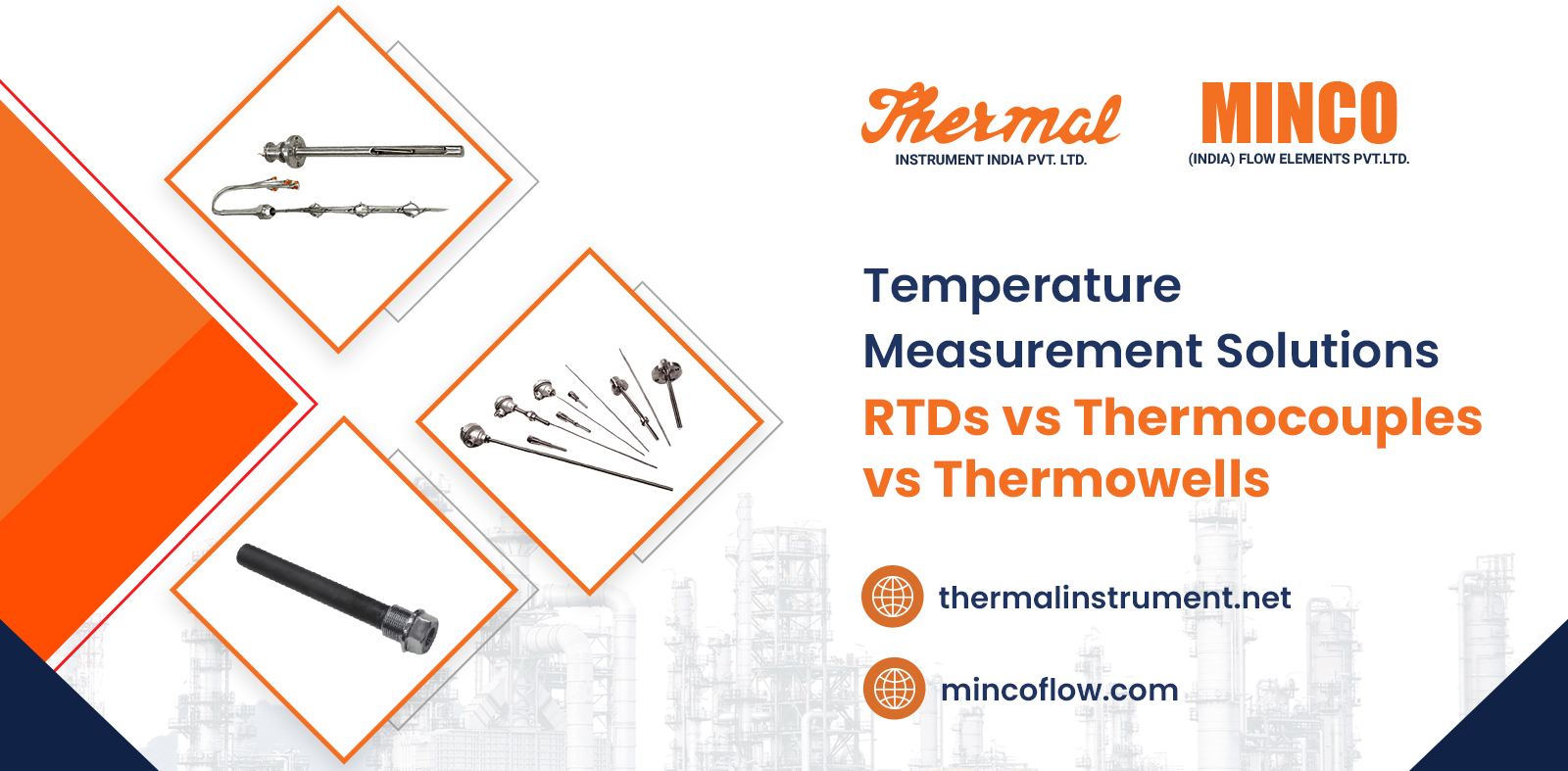
Temperature Measurement Solutions: RTDs vs Thermocouples vs Thermowells
Temperature is one of the most monitored parameters in industrial operations. Whether it’s a refinery, chemical plant, power station, or food processing facility, consistent temperature measurement ensures safety, efficiency, and product quality. As a trusted manufacturer, Thermal Instrument, we provide clarity on three essential components in temperature measurement, RTDs, Thermocouples, and Thermowells, so you can choose the most effective solution for your process.
RTDs – Precision and Stability
RTDs (Resistance Temperature Detectors) are renowned for their high accuracy and long-term stability. Constructed typically with platinum elements, RTDs deliver consistent and repeatable measurements, making them ideal for applications where precision cannot be compromised. They operate reliably across low to moderately high temperatures and maintain excellent linearity, ensuring dependable performance over extended use.
Industries that demand tight process control, such as pharmaceuticals, food manufacturing, HVAC systems, and laboratory environments, benefit most from RTDs. Their stable behavior and accuracy make them a preferred choice when product quality and compliance are top priorities.
Thermocouples – Versatility in Harsh Environments
Thermocouples are engineered for versatility and durability. They withstand extremely high temperatures and perform well in harsh, fast-changing environments where robust performance is vital. By generating a voltage between two dissimilar metals, thermocouples offer a wide operating range and quicker response times compared to RTDs.
They are widely used in furnaces, boilers, petrochemical heaters, metal processing units, and applications where temperatures fluctuate rapidly. Thermocouples are also more cost-effective for rugged environments, making them suitable for demanding industrial operations where resilience is essential.
Thermowells – Protection and Process Safety
Thermowells are protective casings that shield temperature sensors from direct exposure to the process medium. Whether you are using an RTD or a thermocouple, a thermowell ensures the sensor is protected from high pressure, aggressive fluids, mechanical impact, and vibration. This not only improves the lifespan of the temperature sensor but also allows maintenance or replacement without interrupting the process.
Thermowells are indispensable in pipelines, reactors, steam service, and corrosive media applications. By creating a safe barrier, they maintain measurement reliability and enhance plant safety—two critical requirements in any industrial setting.
Choosing the Right Solution
Selecting between an RTD, a thermocouple, or a thermowell depends entirely on your process requirements. If accuracy and long-term stability are essential, RTDs are the best fit. For environments involving extreme temperatures or rapid temperature changes, thermocouples offer better durability and responsiveness. Thermowells, on the other hand, are necessary whenever process conditions are harsh, or when uninterrupted operation is required.
In many cases, the optimal solution is a combination—pairing the appropriate sensor with a well-designed thermowell ensures accuracy, longevity, and ease of maintenance.
Conclusion
RTDs, thermocouples, and thermowells play distinct yet complementary roles in industrial temperature measurement. By understanding their strengths and applications, industries can build reliable, efficient, and long-lasting measurement systems. As a leading manufacturer of Thermal Instrument, we support our customers with engineered solutions tailored to their process conditions, ensuring dependable performance across every application.
Ready to upgrade your temperature measurement reliability?
Get in touch with our team for expert guidance, customized recommendations, and robust thermal instrument solutions designed for your industry.